
Business Resilience, Why Proactive Preparedness Matters.
What happens when businesses don’t prepare for disruption?
In Australia, we’re very good at talking about disasters in the past tense.
Floods. Fires. Drought. Cyclones. Pandemics. Cyber breaches. Supply chain shocks.
We respond.
We rebuild.
We fund recovery programs after the damage is done.
But we rarely invest seriously in helping businesses prepare before disruption hits.
That gap is costing the economy millions.
The last few years have exposed just how vulnerable small and medium businesses can be.
COVID-19 reshaped global trade. Cyber security incidents are now routine. Extreme weather events are intensifying across Australia and the Pacific. And just last month, Cyclone Harry devastated parts of eastern Sicily, including Fondachello, the fishing village where my father grew up damaging homes and livelihoods in a matter of hours.
Disruption isn’t just environmental.
It’s digital.
Economic.
Social.
Human.
Yet most business resilience programs are still designed to be reactive launched only after a crisis has occurred. We are really good at doing this here in Australia. Reactive resilience delivered after the damage is done and too far down the track. By that point, business owners are exhausted, financially stretched and emotionally overwhelmed. Asking them to suddenly be resilient in the middle of recovery is often too little, too late.
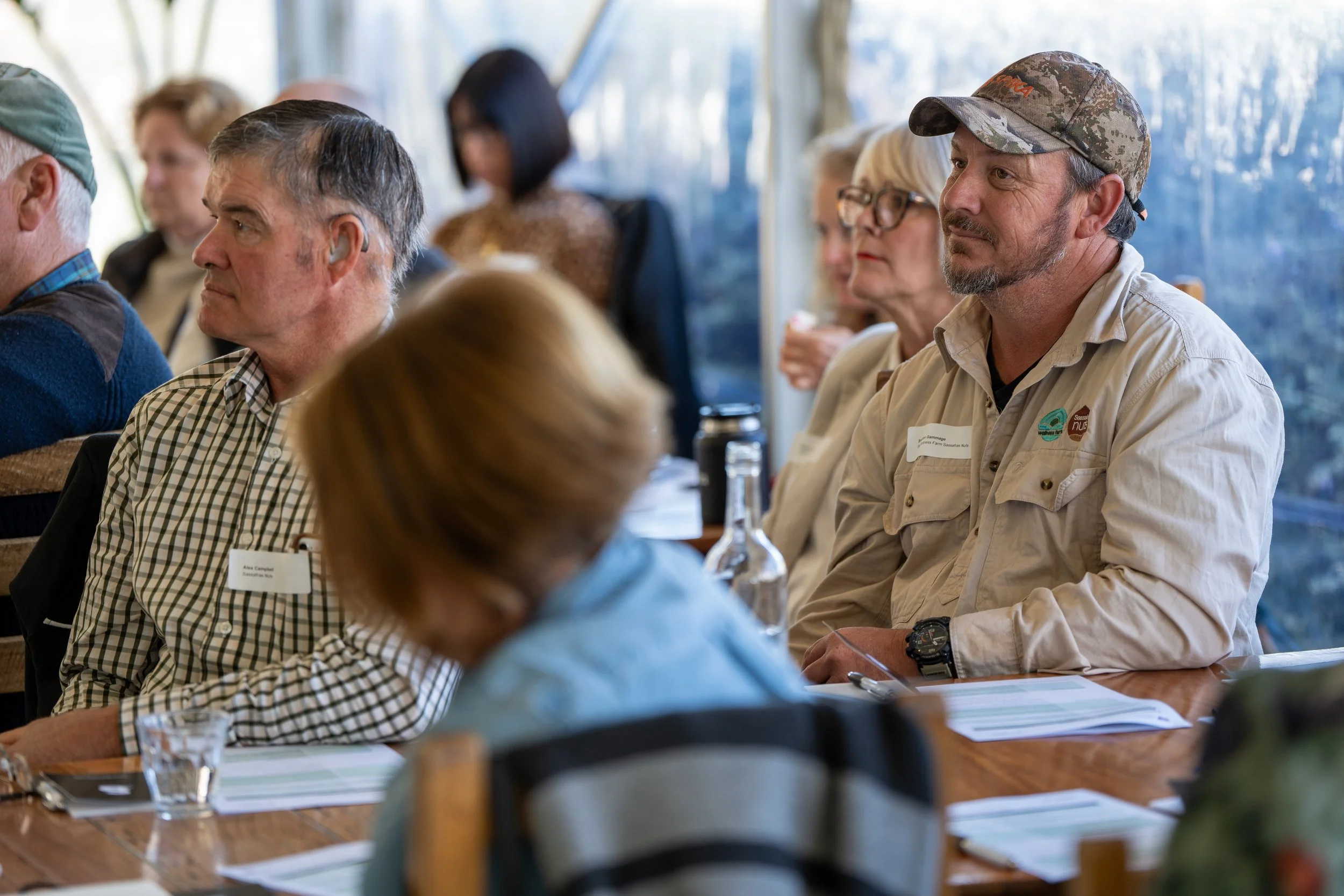
Farmers participating in a business diversification workshop.
A proactive planned approach to building business resilience before the Next Crisis
At Sparrowly Group, we take a different approach in our own business and with the businesses we mentor and support.
Since 2020, we’ve designed and delivered proactive business resilience programs across Australia.
Our programs focus on practical, everyday resilience:
business continuity planning
financial resilience and cashflow strength
digital and cyber preparedness
workforce and operational flexibility
peer networks and local collaboration
More than 1,000 small and medium businesses have now participated, using tools that build real capability rather than ticking compliance boxes.
The goal is simple - To help businesses prepare for uncertainty before it arrives and meet them where they are at, not where you expect them to be at. Every business owner comes in with a different journey story.
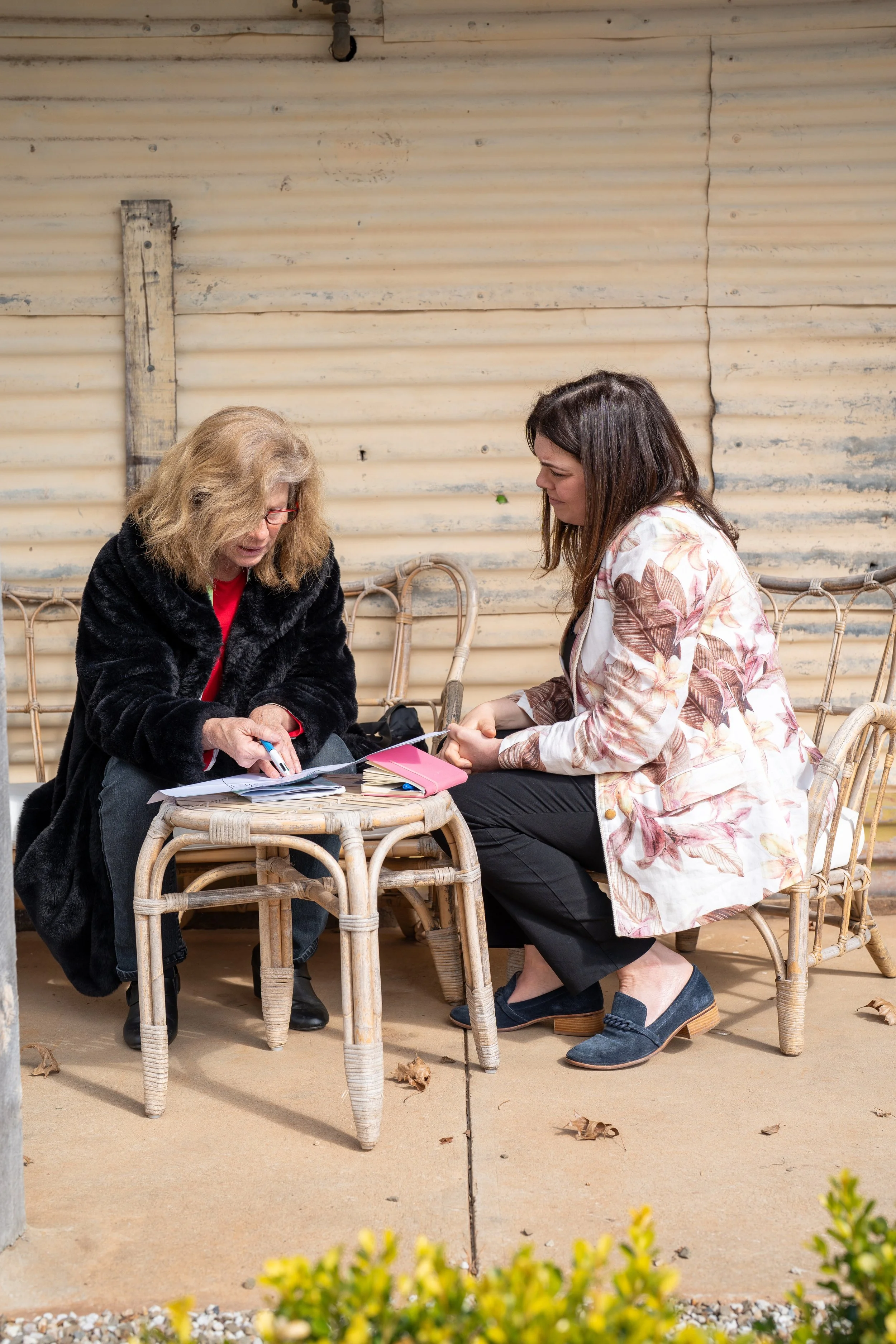
Giovanna during a mentoring session in regional NSW. They are mentoring outside on a porch sitting and reviewing business plans.
Language shapes engagement
In addition to timing, one of the most important insights from our programs that we insist upon with our clients is communication.
The words we use to talk about resilience can either invite businesses in or push them away.
For many owners, the phrase disaster resilience feels heavy, negative and distant from their everyday concerns. Using disaster language and imagery is off putting, triggering and impacts business uptake.
Most businesses don’t identify with the idea of disaster planning.
They care about:
keeping customers
paying staff
managing rising costs
protecting data
surviving economic shocks
When programs are framed purely around disasters, engagement drops. When they’re framed around stronger, safer, more adaptable businesses, engagement rises.
Communication also needs to be clear and simple.. Too many mixed messages, multiple surveys, workshops and pathways creates confusion. Be precise, practical and focus on a single clear message to encourage businesses to engage.
This is a critical insight for councils and agencies designing SME support.
Business resilience must be communicated as a capability – not a crisis response.
Why Resilience Must Become Everyday Business Practice
Preparedness isn’t about predicting the next flood, fire or cyber attack.
It’s about giving business owners the confidence, tools and relationships to adapt, whatever comes their way.
That’s how I run my own company. Sparrowly Group operates proactively, because every business owner knows that running a business is rarely a smooth road. Weekly business operations meetings that cover all of the areas that we SMEs care about outlined above and continue to look forward to innovation and iteration.
If we want resilient regional economies, resilience can’t be treated as a one-off project after a disaster.
It needs to be embedded into:
economic development strategies
small business support programs
chamber initiatives
industry capability building
regional growth planning
True resilience is built before it’s tested. And this is how my business continues to weather the storm of the post COVID-19 economic slump.
From Reactive Recovery to Proactive Preparedness
Disruptions will keep happening.
The only real question is whether Australian businesses will be ready.
For local, state and federal governments and economic development agencies now planning their 2026–2027 programs, this is the moment to shift the model.
Proactive resilience programs:
reduce long-term recovery costs
strengthen local economies
protect jobs
improve community stability
help businesses survive and grow
When resilience is proactive, businesses engage.
When it’s reactive, we simply add to their stress.
Let’s build resilient business communities – before the next disruption hits
If you’re a:
Local Council
Regional Development Agency
Chamber of Commerce
Economic Development Team
Disaster Recovery or Community Resilience Unit
and you’re planning future business support programs, we can help and build not only the capability of your business communities and engine industries but that of your teams for future programming.
Sparrowly Group partners with local, state and federal governments and agencies across Australia, New Zealand, South East Asia and The Pacific to design and deliver practical, proactive Business Resilience Programs that:
are tailored to local industry needs
use language businesses connect with
focus on real capability building
achieve measurable engagement
strengthen entire business ecosystems
We can support you with:
Business resilience strategy design
Workshops and mentoring programs
SME capability tools and resources
Regional engagement planning
Evaluation and impact reporting
Let’s move resilience from a reactive recovery expense to a proactive economic development investment.