

Making Agritourism Work. Insights from 10+ Years Supporting Australian Farms.
We've been supporting producers, graziers and farmers to diversify into tourism for more than a decade, long before agritourism became a buzzword. And, our roots run deep. Giovanna grew up on a horticulture farm in Bundaberg, working behind the scenes in the family business and running their own mini farmgate. Today, Sparrowly Group works at the nexus of agriculture, tourism and economic development, delivering strategic roadmaps and hands-on mentoring programs across Australia.
The opportunity is undeniable. Recent data from Tourism Research Australia shows visitors spent $20.3 billion in 2024 engaging with agritourism, visiting farms, wineries, breweries, farm gates, food markets and Aboriginal food experiences (learn more here). Growth projections point to continued momentum.
But here's the real question - “What does it take to make agritourism work? Not just for one farm, but across regions and nationally.”
Drawing on our expertise and projects we have developed and facilitated across Australia here are our key learnings for farmers looking to diversify and tourism managers developing this sector.
Strategy only works when coupled with on-ground capability
Tourism wants and needs the agricultural sector. Farm stays, meet-the-maker experiences, paddock-to-plate dining. The agricultural sector doesn't necessarily need or understand tourism. Our job is to connect these dots and walk with farmers on their journey.
The blueprints and roadmaps we've developed across regions only succeed when they're practical, realistic, and co-designed with the agricultural community. We don't just hand over reports, we implement alongside industry through mentoring, workshops, and safe spaces to explore and test ideas.
Critical to success is connecting the regulatory dots between tourism, planning and economic development - the holy trinity for compliant and viable agritourism. For the Midwest Victoria region for instance, we established a Community of Practice bringing together representatives from each directorate across five local governments. Without strategy, efforts risk being fragmented or duplicative.
Authenticity beats perfection every time
Here's the reality check. Agritourism is agriculture first, tourism second. This matters for business accounting, insurance and visitor expectations.
Visitors don't expect perfection. They want authenticity, real stories and genuine interactions. They want to see the dirt, the behind-the-scenes running of a working farm. People buy a day in your life, not a ticket. The experiences that win are hands-on, story-rich, and close to the farm's real rhythm.
Our first question to potential operators is always, "Are you comfortable having strangers on your property?" and "Do you like talking to people?" These simple questions often determine viability, or open up alternative delivery approaches involving other family members.
Viability concerns are real. Family buy-in, insurance complexity, council approvals, balancing farm operations. Different experiences generate different revenue. Farm gate sales might bring $10 - $80, experiences $10 - $200 per person, accommodation $100 - $600 per night.
Our advice? Start small, test and learn, then scale. Pick-your-own, seasonal events, or farm tours help to build momentum.
Plan like a producer
Smart operators diversify permits and products to de-risk. Don't put every activity under one approval. Have weather plans, insurance coverage, staffing schedules, and communications ready.
Brand is essential and you need to establish this to drive bookings. Get clear on who you serve and what problem you solve. Tailor messaging to market segments - families, foodies, learners, visitors with accessibility needs and the channels they actually use. Instagram might be the shopfront, but substance is the store. Beautiful, real images pull people in, on-farm substance earns reviews and repeat business.
A recent farm tour of Jurlique in South Australia’s Adelaide Hills highlighted just how well thought out and executed an experience can be through simple, yet effective, touches including replacing a traditional ‘Tester’ sticker on products with ‘Experience’, and samples plotted throughout the light-walking tour ready for a stop and talk.
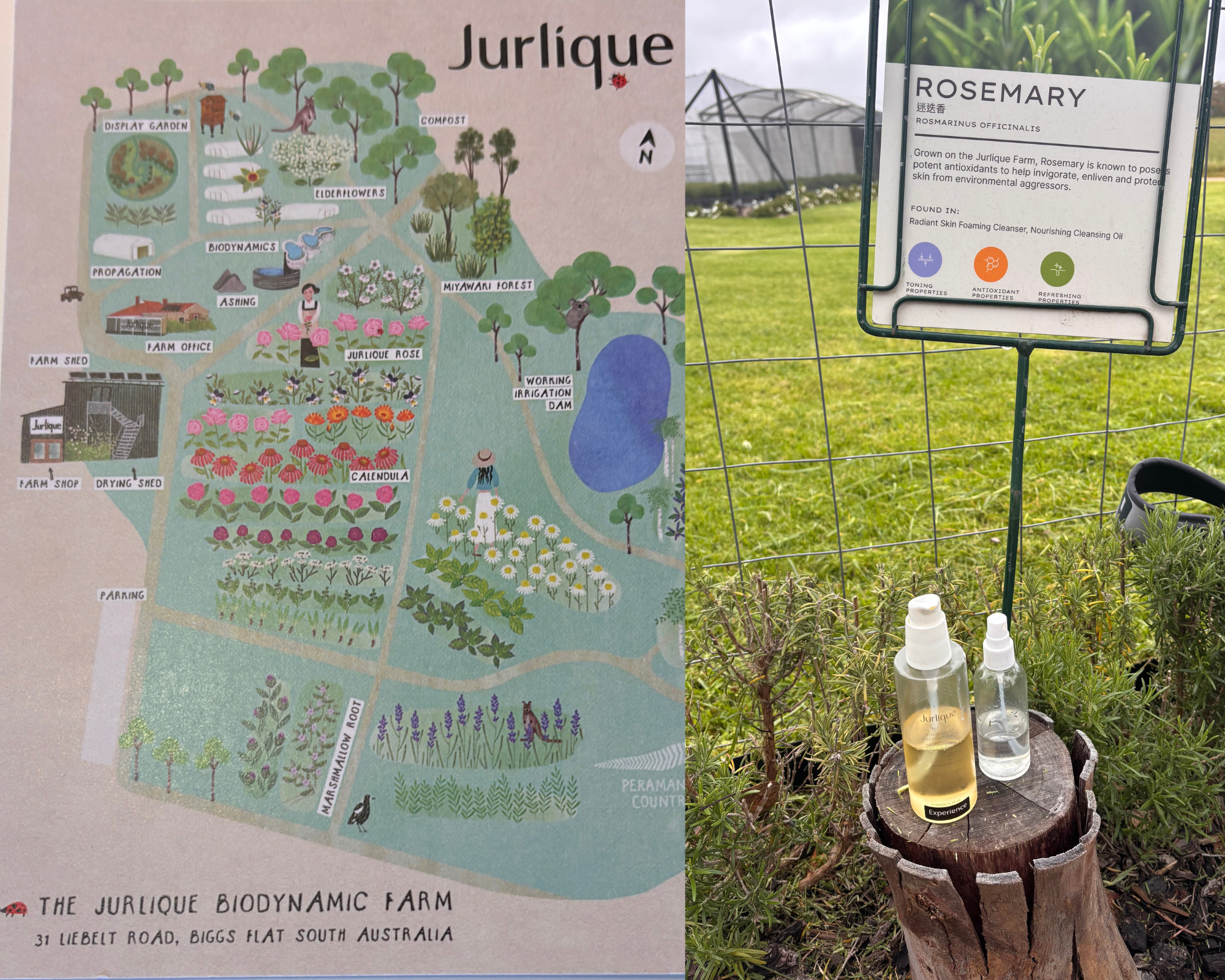
ID: Jurlique farm map postcard and product sample.
Stack your revenue streams
Strong business models blend accommodation, experiences and events. Think paddock dinners, meet-the-maker tastings, seafood or wild harvest trips, lambing or wildflower seasons, wedding and venue offerings that stay true to place.
Emerging operators are blending agriculture with content, community and collaboration. Seeing agritourism as a pathway into farming, not just an add-on. This next-generation thinking brings fresh energy to the sector. Our mentee alumni Cupitt’s Estate on NSW’s South Coast does this efficiently as a family-run winery, restaurant, wedding venue, and luxury accommodation destination.
Accessibility is growth, not niche
Inclusive farm destinations aren't a side project, they're smart business. Clear wayfinding, accessible surfaces, bathrooms, plain-English booking information, and upfront accessibility details open the gate to more visitors. Our work developing Australia's first Accessible Communications Indicator proves demand exists when information is clear and honest. A great example of where access and inclusion have been front of mind is the agritourism product and experience design at Macadamias Australia in Bundaberg applying universal design principles in their agritourism business and venue.
Policy can unlock or block momentum
Councils and red-tape reduction teams are key enablers. Clear rules, simpler approvals and practical guidance accelerate safe, quality products. NSW planning reforms introduced exempt and complying pathways for example, but interpretation varies council-to-council. Think of local government and tourism organisations as champions, not blockers. Work with them, show the vision, do the due diligence. True partnership is essential.
Regional impact is real
Tourism jobs and spend flow to regional areas when we back producers to host, tell their stories, and partner locally. And across NSW, Victoria and Queensland, we've seen how mentoring and support refines pricing models, strengthens digital channels, and builds grant readiness.
The fundamentals - Place, People, Produce - hold true nationally, but support must be locally tailored. Data and road-testing beat guesswork. Visitor insights consistently show demand for small groups, authentic hosting and transparent pricing.
The bottom line
Agritourism isn't about changing what farmers do. It's about sharing what they already do brilliantly and connecting it to the visitor economy. Success lies in authenticity, planning and collaboration.
What could visitors experience on your farm tomorrow?
Sparrowly Group has spent over a decade in the space where these sectors meet. From developing regional roadmaps to mentoring individual operators through their first season. If you're navigating approvals, pricing models, accessibility, or simply wondering where to start, reach out. We help farmers, regions, councils and tourism bodies turn potential into practice.